
Here’s a quick-reference guide for HR staff and in-house counsel to integrate privacy for employee PII into everyday operations.
Think “privacy first,” not “privacy later.” Embedding privacy by design protects employees, reduces legal risk, and fosters trust across the organization.
1. Establish Clear Policies and Training:
- Develop clear, role-based privacy policies. Tailor them to functions (e.g., recruiting, payroll, benefits administration, employee relations).
- Train regularly. Offer onboarding and annual refreshers emphasizing data minimization, access control, secure communication, and incident reporting.
- Provide scenario-based training. Engage HR, Legal and HR Information Security in regular tabletop exercises. Use real HR examples, like handling accommodation requests or reference checks, to bring policies to life.
- Document all training completions and acknowledgments to demonstrate compliance.
- Foster a privacy-aware culture. Encourage employees to think: Am I collecting or sharing only what’s necessary?
2. Policies and Training Should Include:
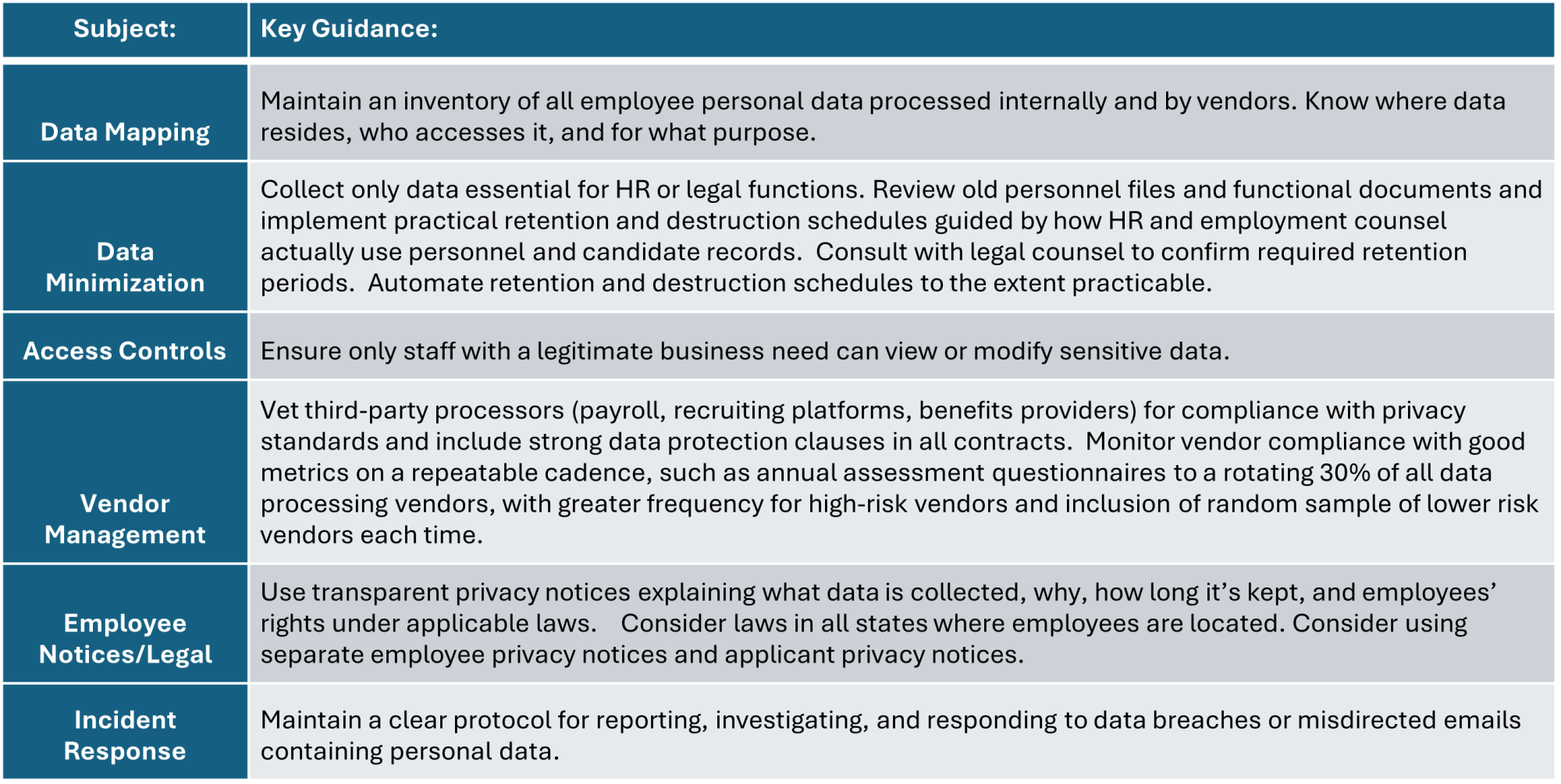
3. Good Practices to Support Good Privacy
- Privacy Impact Assessments (PIAs).Require PIAs for new systems, HR software, or data-sharing initiatives.
- Secure default settings. Configure HR platforms and databases with privacy-protective default settings (e.g., limited data visibility).
- Automate where possible. Use automated retention alerts and role-based access controls to minimize manual risk.
- Cross-functional collaboration. Involve HR, Legal, IT, and Security early when designing or changing processes that touch employee personal data.
- Monitor continuously. Schedule regular audits and policy reviews to adapt to legal updates.
- Communicate openly. Reinforce privacy as part of corporate values, not just compliance, with ongoing messaging during Data Privacy Week and beyond.